

When you think of interior doors, wood often comes to mind. But walk into a modern home or a well-designed kitchen, and you will see something else. Aluminum glass doors. They are lighter than solid wood. They do not warp. They do not attract termites. And they bring a clean, open look that wood cannot match.
This guide is for buyers, designers, and project managers. It covers the details that matter: aluminum thickness, glass choices, edge design, and how to avoid costly mistakes. We will also explain how Alummira, with 10 years of extrusion experience and 7 years of aluminum customization, helps you get it right.
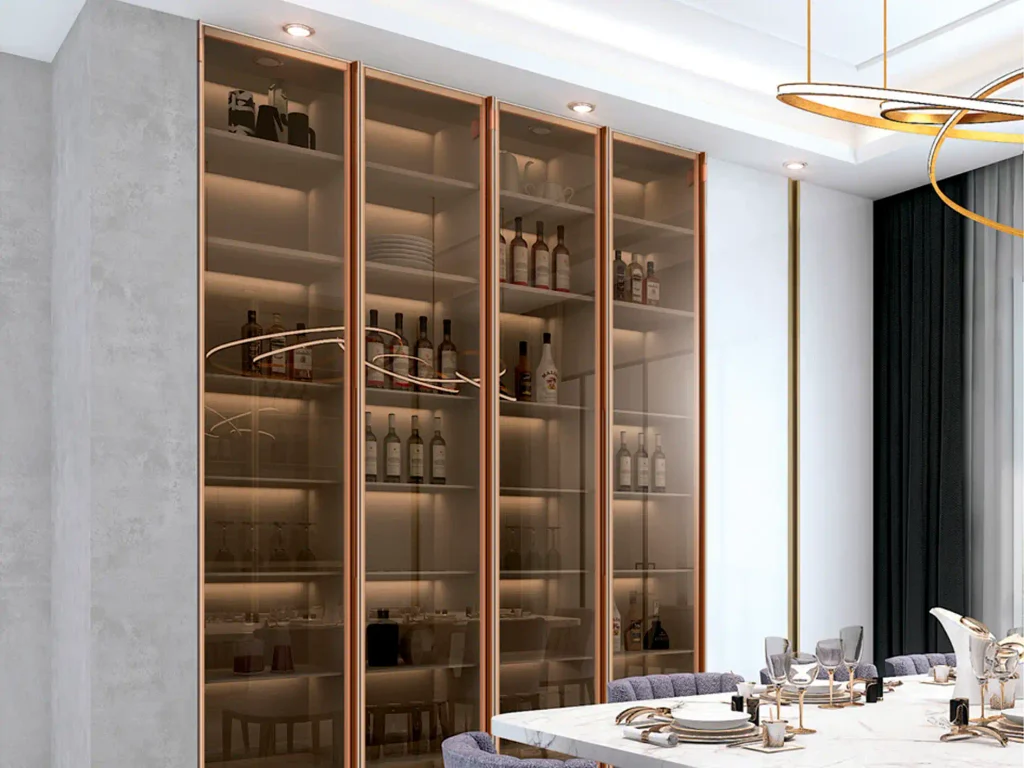
Why Aluminum Glass Doors Are Replacing Wood
Wood has been the default for wardrobes and kitchen cabinets for decades. But wood has problems. It swells in humidity. It gets eaten by insects. It is heavy. And solid wood doors need strong hinges and careful maintenance.
Aluminum glass doors solve these issues. The frame is aluminum. The panel is glass. The result is a door that is strong, light, and stable. An aluminum door does not rot. It does not feed insects. It handles moisture without swelling. And because glass is lighter than solid wood, the hardware lasts longer. Hinges and sliders work smoothly for years.
There is also the look. A glass door makes a room feel bigger. It reflects light. It adds texture and depth. Whether you choose a clear glass or a textured one, the space feels more open and more finished. This is what we call emotional value. The room does not just function. It feels better.
And the cost? For many interior applications, an aluminum glass door is more affordable than a high-end wooden door. It gives you a premium look without the premium maintenance.
Thickness Is Not a Small Detail. It Is the Whole Game.
Here is where many projects fail. The aluminum profile is too thin. It looks fine on a sample. It passes a quick check. But once the door is assembled and installed, it bends. It twists. It does not close properly. And the client rejects the whole shipment.
We heard about one case. A contractor took on a project worth 1.5 million. The supplier reduced the wall thickness to save cost. The doors were tall, between 1.8 and 2.2 meters. The glass weighed about 20 kg per square meter. The thin aluminum could not handle the load. The doors deformed. The client refused the entire order. That is a disaster that could have been avoided with a simple rule.
For interior aluminum glass doors, the wall thickness should be 1.5 mm to 2.0 mm. This is not a suggestion. It is a requirement for doors of this height and glass weight. Here is why.
A door is a lever. When you open and close it, you apply force. The glass adds constant weight. The aluminum frame must resist bending. It needs a certain amount of deflection. That means it can flex slightly under load, but it must return to its original shape. If the wall is too thin, the flex becomes permanent. The door sags. The edges rub. The lock does not line up.
Think of it like a bridge. A bridge is designed to bend a little under traffic. But if it bends too much, it breaks. The same applies to your aluminum door. A 1.5 mm wall is the minimum for a standard 1.8-meter door with 20 kg/m² glass. For a 2.2-meter door, you should go to 2.0 mm. For wider doors or heavier glass, you need even more.
Alummira has seen this problem many times. With 10 years of extrusion experience, we know how to balance strength and weight. We do not cut corners on thickness. We help you calculate the right profile for your specific door size and glass load. This is how you avoid a 1.5 million mistake.

Glass Choices That Define the Space
The aluminum frame is the skeleton. The glass is the soul. The right glass changes everything. Here are the common options for interior aluminum glass doors.
Grey Tea Glass – A warm, smoky tone. It reduces glare. It adds a soft, sophisticated look. Popular for wardrobes and bedroom furniture.
Ultra-Clear Glass – Low iron. Almost no green tint. It shows the true colors of what is inside. Perfect for kitchen cabinets and display cases.
Long Grain Glass (Fluted Glass) – A textured surface with vertical lines. It lets light through but hides the contents. Great for kitchen cabinets where you want to hide everyday items.
Wired Glass – A layer of wire mesh inside the glass. It adds safety and a vintage industrial look. It also holds the glass together if it breaks.
Switchable Glass – Also called smart glass. It changes from clear to frosted with a switch. It gives you privacy on demand. A high-tech option for modern offices and bathrooms.
Sprayed Glass – A pattern or image sprayed onto the glass. It can be subtle or bold. It turns a simple door into a design feature.
Each glass type has a different weight. Long grain and wired glass are slightly heavier. Switchable glass needs a power source. Alummira helps you match the glass to the frame. We make sure the aluminum profile can carry the load.
Narrow Edge and Hidden Edge: The Design Trend
Interior design is moving toward cleaner lines. Aluminum glass doors are no exception. Two styles lead the market: narrow edge and hidden edge.
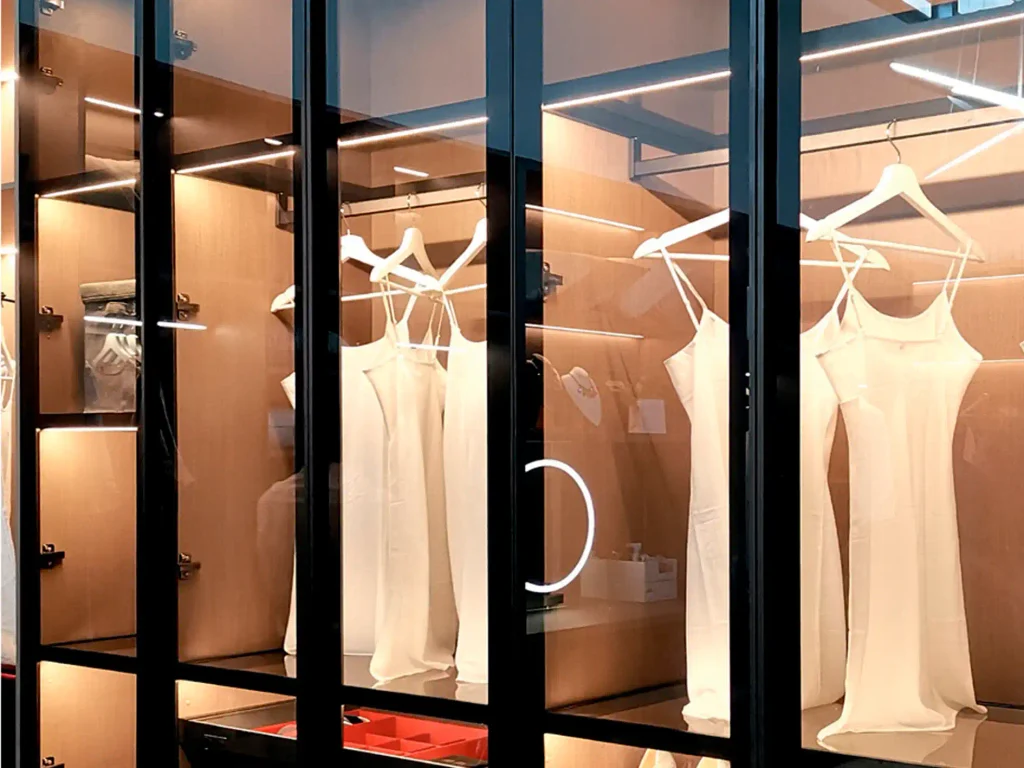
Narrow Edge – The aluminum frame is visible but very slim. It can be 20 mm or less. This maximizes the glass area. The door feels lighter. The room feels more open. It is a favorite for kitchen cabinets and wardrobe doors.
Hidden Edge – The frame is recessed or covered. From the front, you mostly see glass. The aluminum is hidden behind the panel. This creates a seamless, floating look. It is very popular in high-end furniture and modern kitchens.
Both styles require precise extrusion. A thin, narrow frame must still be strong. If the wall thickness is too low, the frame will twist. The glass may crack. The door will not align. This is why the 1.5-2.0 mm wall thickness matters even more for narrow edge designs.
Alummira specializes in custom aluminum profiles. With 7 years of customization experience, we can produce narrow and hidden edge frames that are both beautiful and strong. We support OEM and ODM. We work with your design files. We help you land the project.
What Alummira Brings to Your Project
Alummira is not just a supplier. We are a partner. We have 10 years of experience in aluminum extrusion. We have 7 years of experience in custom aluminum solutions. We understand interior doors, wardrobes, kitchen cabinets, and furniture.
We know the problems. Thin walls. Wrong glass. Poor hardware. We help you avoid them. We offer:
- OEM and ODM services – Send us your drawings or samples. We will produce the profile you need.
- Custom design support – Our engineers help you choose the right wall thickness, glass, and edge style.
- Full range of finishes – Anodized, powder coated, wood grain. Any color you want.
- Hardware integration – We work with trusted hinge and slider brands. We make sure everything fits.
Whether you are a furniture maker, a contractor, or a distributor, we help you deliver a product that your clients will love. No deformation. No rejects. Just smooth, beautiful aluminum glass doors.
FAQ
Q: What is the best aluminum thickness for an interior glass door?
A: For doors 1.8 to 2.2 meters tall with 20 kg/m² glass, use 1.5 mm to 2.0 mm wall thickness. For taller or wider doors, go to 2.0 mm or more. Never go below 1.5 mm.
Q: Why did a thin aluminum door cause a 1.5 million loss?
A: The supplier reduced the wall thickness too much. The doors bent under the glass weight. They did not close properly. The client rejected the whole batch. Thickness is not a place to save cost.
Q: Which glass is best for kitchen cabinets?
A: Long grain glass is great for hiding clutter. Ultra-clear glass is best for showing off clean dishes. Both work well with aluminum frames.
Q: Can aluminum glass doors replace wooden doors?
A: Yes. They are lighter, do not rot, and resist insects. They also last longer because the hardware carries less weight.
Q: Does Alummira support custom sizes and designs?
A: Yes. We support OEM and ODM. We do custom design for aluminum profiles, glass, and finishes. Send us your project details.
Q: How do I prevent door deformation?
A: Use the right wall thickness. Match the profile to the door height and glass weight. Work with a supplier who understands extrusion. Alummira can calculate it for you.
Final Thoughts
An aluminum glass door is more than a functional panel. It is a design choice. It brings light, space, and a modern feel to any interior. But it only works if the engineering is right. Thickness matters. Glass matters. Edge design matters.
Do not let a thin profile ruin your project. Choose a partner who knows aluminum. Alummira has the experience and the customization skills to help you deliver doors that look great and last for years. Contact us today to discuss your next project.