

Introduction
- State in one sentence: all-aluminum home furnishing is not “pure aluminum furniture,” but metal furniture whose main structure is made of aluminum alloy profiles.
- Clarify two common misunderstandings upfront: it is not pure aluminum; nor does it mean that 100% of all components are aluminum.
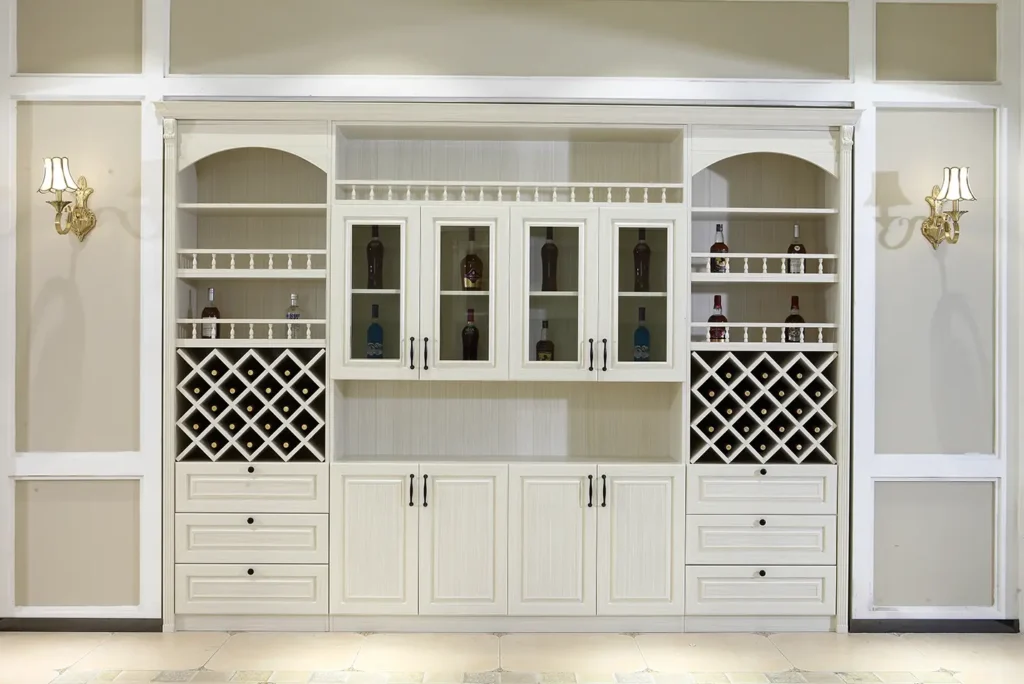
1. The Essence: “Metal Furniture” with an Aluminum Alloy Skeleton
- The main material is aluminum alloy, not pure aluminum.
- Common grades such as 6063-T5 are used, balancing strength and formability.
- Thickness affects durability: cabinet bodies/door panels are recommended to be ≥1.2 mm, and load-bearing parts ≥1.5 mm; welded solid panels have higher thickness requirements.
2. Products All Called “All-Aluminum” Can Differ Greatly in Internal Structure
- Spliced panels: assembled from hollow aluminum profiles; lower cost, but with visible seams and weaker overall integrity.
- Welded solid panels: laser-welded into a single solid panel without glue; better environmental performance and strength, but more expensive.
- Aluminum honeycomb panels: two aluminum face sheets sandwiching an aluminum honeycomb core; lightweight and strong, but close attention should be paid to the environmental safety of the adhesive between the face sheets and the honeycomb core.
3. How the Wood-Grain Appearance Is Achieved: Through Surface Treatment
- The most common method is heat-transfer wood-grain printing, which can reproduce wood-grain textures.
- Other processes include spraying, anodizing, and electrophoretic coating.
- Surface treatment only determines appearance and weather resistance; the interior is still aluminum.
4. “All-Aluminum” Does Not Mean 100% Aluminum
- About 99% of the main body is aluminum alloy, such as cabinet bodies, shelves, and door panel frames.
- Functional accessories such as hinges, screws, connectors, and edge banding may use other metals or plastics.
5. Advantages and Points to Note
- Advantages: moisture resistance, fire resistance, insect resistance, recyclability, and resistance to moisture deformation.
- Note: performance depends heavily on panel structure, aluminum thickness, and processing technology; low-quality honeycomb panels may carry adhesive-related environmental risks.
6. Simple Buying Advice
- First ask about the internal structure: spliced panels, welded solid panels, or aluminum honeycomb panels.
- Then ask about aluminum thickness and grade.
- For honeycomb panels, focus on the environmental safety of the adhesive.
- Check the hardware accessories and surface process.
- Do not just listen to the words “all-aluminum”; look at the specific materials and craftsmanship.
7. Conclusion
- Summary: the essence of all-aluminum home furnishing is “metal furniture made with an aluminum alloy skeleton and different structural and processing methods.”
- Whether it is worth buying depends not on the name, but on structure, thickness, craftsmanship, and adhesive environmental safety.
Writing Tips
- Write 1–2 paragraphs under each subheading; avoid being overly technical.
- A simple comparison table can be added to the “three panel structures” section.
- Keep the whole article centered on one sentence: “All-aluminum” refers to the main material, not all components; what really determines quality is structure and craftsmanship.
FAQ (Condensed, Separate Paragraphs)
Q1: Is all-aluminum home furnishing made of pure aluminum?
No. It mainly uses aluminum alloy profiles such as 6063-T5, because pure aluminum is too soft for good strength and formability.
Q2: Will all-aluminum home furnishing rust?
Generally no. Aluminum alloy is corrosion-resistant and usually receives surface treatments, though strong acids, alkalis, or deep scratches may still affect its appearance.
Q3: Does all-aluminum home furnishing contain formaldehyde?
It depends on the panel structure. Welded solid panels usually use no glue, spliced panels use little adhesive, while honeycomb panels require adhesive, so glue quality and test reports matter.
Q4: Are honeycomb panels less environmentally friendly than welded panels?
Not necessarily. Welded panels avoid glue structurally, but high-quality honeycomb panels with eco-friendly adhesives can also meet high environmental standards.
Q5: Is all-aluminum home furnishing easy to deform under load?
It depends on aluminum thickness, panel structure, and installation. Cabinet bodies and door panels are recommended to be at least 1.2 mm thick, and load-bearing parts at least 1.5 mm.
Q6: Why do all-aluminum products vary so much in price?
Mainly because of structure, aluminum thickness, surface process, hardware, and adhesive environmental safety. Do not compare prices by the name “all-aluminum” alone.
Q7: Does it feel cold or sound hollow when tapped?
Metal can feel cold and produce some echo, but wood-grain treatment, internal filling, thicker panels, and quality hardware can improve this.
Q8: What are its main pros and cons compared with wooden cabinets?
Pros include moisture resistance, fire resistance, insect resistance, recyclability, and resistance to moisture deformation. Cons include generally higher prices and the need for surface processes to soften the metal texture.
Q9: How can I simply judge its quality?
Ask about the internal structure, aluminum grade and thickness, and adhesive environmental safety for honeycomb panels. Also check hardware, edge details, and surface process.
Q10: How should it be maintained?
Daily cleaning with a soft cloth is enough. Avoid strong acid or alkaline cleaners and sharp scratches, and regularly check whether hardware parts are loose.
