
Введение
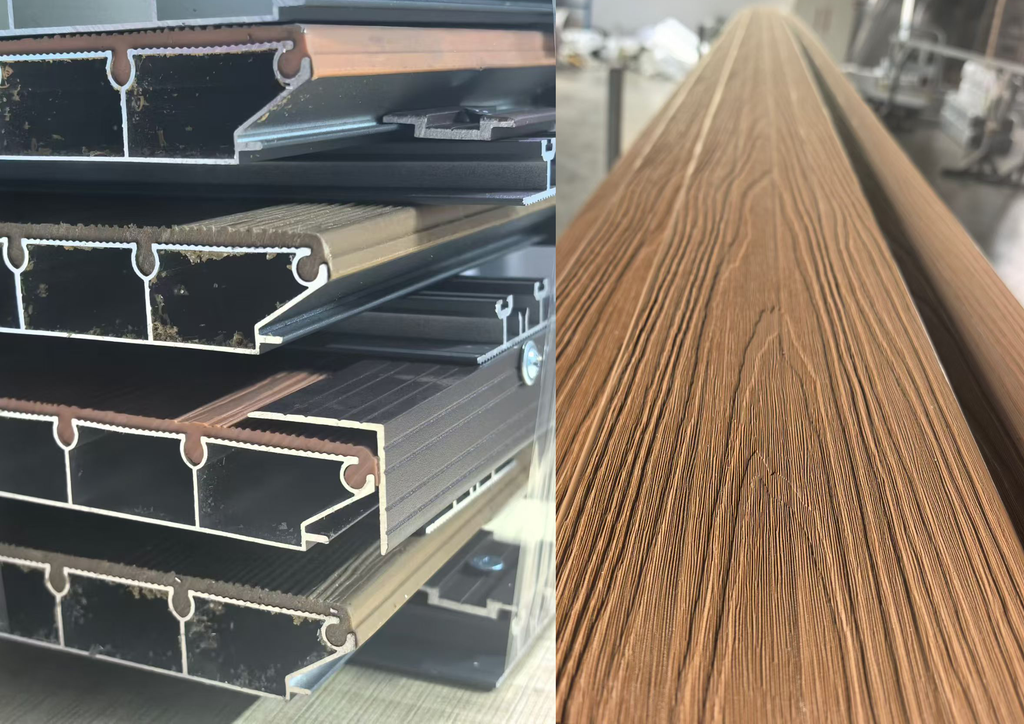
This product has a different structure. It is not pure PVC decking. It is not pure aluminium decking. It is a composite. Extruded aluminium forms the skeleton. It provides structure, dimensional stability and load capacity. The PVC surface layer provides wood-effect appearance, dust resistance and underfoot feel.
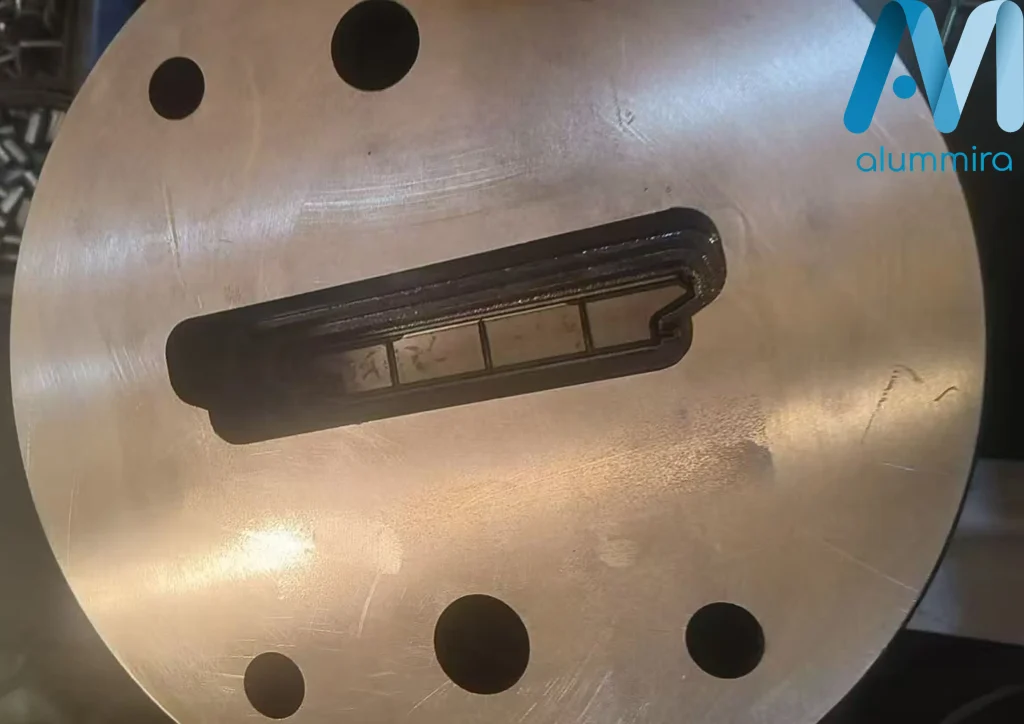
Alummira is our aluminium supplier. We bring 10 years of extrusion experience. We bring 7 years of customisation expertise. Alummira keeps us updated on product processes. It offers a diverse range of product and service options. For European projects, this supports the market’s expectations for precision, consistency, dependable delivery and well-documented process control.
Structural Stability and Outdoor Weathering
Timber has a moisture problem. Preservative-treated timber is still wood. It absorbs water. It expands, cracks and grows mould. In damp regions, unmaintained timber may decay in 3–5 years. Practical life in the Yangtze River Delta is often 5–8 years.
Pure PVC decking does not fear water. But it has a UV weakness. Ordinary SPC has no long-term anti-UV treatment. UV exposure breaks down PVC. The surface fades and becomes brittle. Heat can soften it. Ordinary SPC may show colour differences in months. It whitens in direct sun. It keeps colour unevenly in shade. Outdoor life is often estimated at 10–20 years. Degradation depends on UV exposure.
This product uses extruded aluminium as the load-bearing skeleton. PVC is only the surface layer. Aluminium controls stability. Aluminium has low linear expansion. It does not swell and crack like timber. It does not rely on polymer strength alone. Good lamination gives adhesion and weather resistance. The aluminium substrate backs the PVC. The wood effect and dust resistance stay stable.
Maintenance Costs
Timber needs maintenance. It is not optional. Preservative-treated timber needs wood oil every 1–2 years. For 20 m², labour and material cost about USD 298–447 per treatment. Annual cost is about RMB 15–30/m². Over 10 years, maintenance may reach half the initial cost or more.
Pure PVC has a maintenance window. Early years are easy. Later, UV ageing starts. Fading and embrittlement cannot be reversed. Worn surfaces are hard to repair locally. Full replacement is often needed. Its low maintenance depends on early end of life.
This product is different. The aluminium substrate does not rust, rot or suffer insect attack. Routine cleaning needs water or neutral detergent. A weather-resistant PVC layer and good lamination reduce maintenance. Normal outdoor use does not need periodic oiling. There is no fixed “must-spend” maintenance point. Whole-life care is close to aluminium outdoor systems.
Installation and Adaptability
Timber and pure PVC have limited installation options. Timber usually needs joists or a substrate. Pure PVC uses click-lock, adhesive or floating installation. It needs a flat base. Outdoor wind and thermal movement demand reliable fixing.
This product supports two methods. It can use welded steel frames. It can use matching joists. Welded steel frames fit site conditions. They suit uneven ground. They suit raised installation. They suit high load and wind requirements. Matching joists give a standard, fast path. Aluminium profiles can be welded and bolted. The structure can adapt to the project. The project does not have to adapt to the material.
Appearance, Feel and Temperature
Timber has natural texture. Wood-effect PVC cannot fully copy it. Pure PVC can look realistic. But it feels hard and cold.
This product offers multiple wood-effect colours. PVC lamination gives the look. Aluminium gives rigid support. The feel is not hollow like thin PVC. One physical point should be noted. Aluminium conducts heat well. In strong summer sun, bare or light aluminium heats quickly. The PVC layer gives some thermal buffering. The feel is milder than pure aluminium. In dark colours and strong west sun, use a light surface or partial shade. This improves barefoot comfort. This does not affect durability. It affects user experience. Early disclosure builds credibility.
Whole-Life Positioning
Initial prices differ. Timber is usually lowest. Pure PVC is middle. Aluminium composite is higher. Longer periods change the picture.
Over about 10 years, timber maintenance can reach tens of thousands of RMB. High-end WPC maintenance can reach RMB 5,000–10,000. Aluminium composite maintenance can stay very low with normal cleaning. Pure PVC is cheap upfront. But UV ageing may force full replacement in 5–10 years. Its annual cost is not low.
This product has a clear position. Initial cost is higher than timber and ordinary PVC. It offers no rot, no oiling and flexible installation. It gives lower annual ownership cost. It gives fewer after-sales disputes. Distributors and project clients get fewer maintenance complaints. End users do not need to “service” outdoor decking regularly.
Application Scenarios
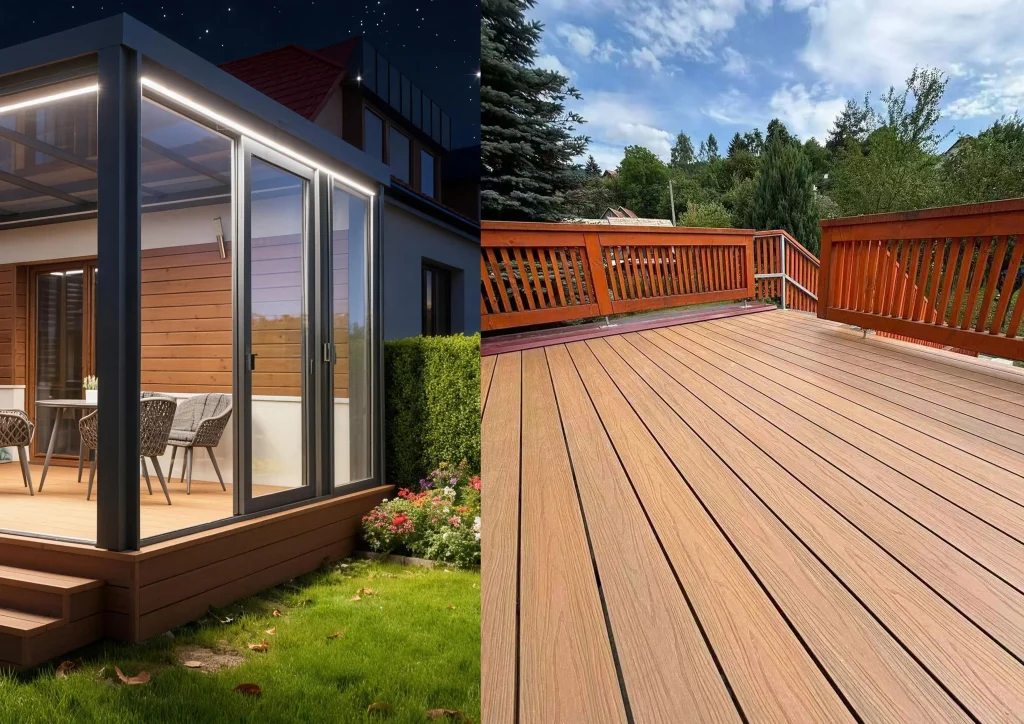
Timber suits dry, low-intensity sites. It suits budget-sensitive users. It suits owners who accept regular care. Pure PVC suits sheltered semi-outdoor spaces. It suits high waterproofing needs with limited UV. It is not recommended for long-term full-sun load-bearing surfaces. This product suits full or semi-exposed balconies, terraces, courtyards, pool surrounds and scenic boardwalks. It also suits raised installation. It suits projects needing load, wind and weather resistance. It suits users who do not want to oil every two years. It suits users worried about pure PVC under strong sun.
FAQ: Aluminium-Framed PVC Composite Decking
Q1. What is this product?
A: This product is a composite outdoor decking board. Extruded aluminium is the structural skeleton. A PVC surface layer provides wood-effect appearance, dust resistance and underfoot feel.
Q2. Is this product pure PVC decking or pure aluminium decking?
A: No. It is not pure PVC decking. It is not pure aluminium decking. It is a composite system with aluminium as the skeleton and PVC as the surface.
Q3. What does the aluminium substrate do?
A: The extruded aluminium substrate provides structure, dimensional stability and load-bearing capacity. Aluminium has low linear thermal expansion. It does not swell and crack like timber.
Q4. What does the PVC surface layer do?
A: The PVC layer provides wood-effect appearance, dust resistance and underfoot feel. The PVC layer needs a weather-resistant formulation and qualified lamination adhesion.
Q5. How does this product compare with timber decking?
A: Timber absorbs water. Timber can expand, crack, grow mould and decay. Preservative-treated timber usually needs wood oil every 1–2 years. This product uses aluminium as the skeleton. The aluminium substrate does not rust, rot or suffer insect attack.
Q6. How does this product compare with pure PVC decking?
A: Pure PVC decking does not fear water, but it has a UV weakness. Ordinary SPC may fade, embrittle and soften under long-term sun exposure. This product uses aluminium to carry structural stability. PVC is only the surface layer.
Q7. What is the maintenance requirement?
A: Routine cleaning needs water or neutral detergent. Normal outdoor use does not need periodic oiling like timber. There is no fixed “must-spend” maintenance point.
Q8. What is the maintenance cost comparison?
A: Preservative-treated timber maintenance for 20 m² costs about RMB 2,000–3,000 per treatment. Annual cost is about RMB 15–30/m². Over 10 years, timber maintenance may reach half the initial cost or more. Aluminium composite maintenance can stay very low with normal cleaning.
Q9. How is the product installed?
A: The product supports two installation methods: welded steel frames or matching joists. Welded steel frames suit uneven ground, raised installation, and high load or wind requirements. Matching joists give a standard, fast installation path.
Q10. Can the aluminium structure be welded or bolted?
A: Yes. Aluminium profiles can be welded and bolted. The structure can adapt to project conditions. The project does not have to adapt to the material.
Q11. What colours and appearance options are available?
A: The PVC lamination offers multiple wood-effect colours. The aluminium substrate gives rigid support. The underfoot feel is not hollow like thin PVC boards.
Q12. Does the product have any temperature-related limitation?
A: Aluminium conducts heat well. In strong summer sun, bare or light aluminium heats quickly. The PVC layer gives some thermal buffering. In dark colours and strong west sun, use a light surface or partial shade to improve barefoot comfort. This does not affect structural durability.
Q13. Where is this product suitable?
A: This product suits fully exposed or semi-exposed balconies, terraces, courtyards, pool surrounds and scenic boardwalks. It also suits raised installation. It suits projects needing load, wind and weather resistance.
Q14. Where is timber decking still suitable?
A: Timber suits dry, low-intensity sites. Timber suits budget-sensitive users. Timber suits owners who accept regular care.
Q15. Where is pure PVC decking suitable?
A: Pure PVC decking suits sheltered semi-outdoor spaces. Pure PVC decking suits high waterproofing needs with limited UV exposure. Pure PVC decking is not recommended for long-term fully exposed load-bearing surfaces.
Q16. What is the whole-life positioning?
A: Initial cost is higher than timber and ordinary PVC decking. The product offers no rot, no oiling and flexible installation. It gives lower annual ownership cost and fewer after-sales disputes.
Q17. Who is Alummira?
A: Alummira is the aluminium supplier. Alummira brings 10 years of aluminium extrusion experience and 7 years of aluminium customisation expertise. Alummira keeps the company updated on product processes and a diverse range of product and service options.
Q18. What does Alummira support for European projects?
A: For European projects, Alummira supports the market’s expectations for precision, consistency, dependable delivery and well-documented process control.
Q19. What is the closing product message?
A: Timber needs feeding. Pure PVC fears the sun. This product uses aluminium as the skeleton and PVC as the face. It puts structural stability and surface ease of care into one board.

Closing Line
Timber needs feeding. Pure PVC fears the sun. Our product uses aluminium as the skeleton and PVC as the face. It puts structural stability and surface ease of care into one board.